by renee | Aug 4, 2026 | Tax Resolution, Tax Resolution
Business Owner Should Know
Running a business comes with enough challenges without having to worry about the IRS. Unfortunately, if your business falls behind on payroll taxes, income taxes, or other federal tax obligations, the IRS has powerful collection tools that can seriously impact your operations.
The good news is that IRS collection actions don’t happen overnight. Understanding the process and acting quickly can help you protect your business and resolve your tax issues before they become more costly.
At [insert your company name], we help business owners facing IRS tax debt. If you still have questions after reading this blog, or need help resolving your tax issue, call us at9
937-268-2737 or visit www.ActionTaxRelief.com.
Common IRS Collection Actions Against Businesses
When taxes go unpaid, the IRS may take several steps to collect the balance owed, including:
- Filing a federal tax lien against your business: A tax lien is the government’s legal claim against your business’s property because of unpaid taxes.
- Levying business bank accounts: If the IRS issues a bank levy, it can freeze and seize funds from your business bank account to satisfy the tax debt.
- Garnishing payments owed to your business: In some cases, the IRS can require your customers or other third parties who owe your business money to send those payments directly to the IRS instead.
- Seizing business assets in certain situations: Although less common, the IRS has the authority to seize business assets such as equipment, vehicles, inventory, or even real estate if other collection efforts are unsuccessful.
- Assessing additional penalties and interest: Unpaid tax balances continue to grow over time as penalties and interest accrue.
- Pursuing the Trust Fund Recovery Penalty (TFRP): For businesses with unpaid payroll taxes, the IRS may hold owners, officers, or other individuals who were responsible for collecting and paying employment taxes personally liable for the trust fund portion of those taxes.
These actions can disrupt cash flow, damage your business’s reputation, and make it harder to continue operating.
Don’t Ignore IRS Notices
One of the biggest mistakes business owners make is ignoring IRS letters. Every notice includes important information about your balance, deadlines, and your rights.
Responding early often provides more options for resolving your tax debt before enforced collection begins.
File Your Tax Returns on Time
Even if you can’t afford to pay your tax bill in full, it’s critical to file all required tax returns. Failure-to-file penalties are often more severe than failure-to-pay penalties, and the IRS generally won’t consider many resolution options until all required returns have been filed.
Staying current with your filing obligations is one of the most important steps you can take.
Prioritize Payroll Tax Compliance
For businesses with employees, payroll taxes deserve immediate attention. The IRS treats unpaid payroll taxes very seriously because employers are holding money that belongs to employees and the government. In some cases, business owners, officers, or other responsible individuals can become personally liable for certain unpaid payroll taxes through the Trust Fund Recovery Penalty.
If you’re struggling to keep up with payroll tax deposits, seek professional guidance as soon as possible.
Communicate With the IRS
If you know your business cannot pay its tax debt immediately, don’t wait for the IRS to escalate collection efforts.
Depending on your circumstances, you may qualify for options such as:
- An IRS installment agreement
- Currently Not Collectible status
- An Offer in Compromise (for qualifying taxpayers)
The right solution depends on your business’s financial situation, compliance history, and the amount owed.
Keep Accurate Financial Records
Well-organized financial records make it much easier to respond to IRS requests and evaluate your available resolution options.
Maintain up-to-date records of:
Good documentation can help prevent delays and support your case during negotiations with the IRS.
Get Professional Help Before Collections Escalate
The sooner you address your IRS tax problem, the more options you may have to resolve it before collection actions become more serious.
A qualified tax resolution professional can review your situation, communicate with the IRS on your behalf, and help you find the best path to resolving your tax debt so you can focus on running your business.
Schedule Your Free Consultation Today
If your business is dealing with IRS tax debt or collection actions, don’t wait. The sooner you act, the more options you may have.
Call Action Tax Relief at 937-268-2737 or visit www.ActionTaxRelief.com to schedule your FREE, no-obligation consultation and take the first step toward resolving your IRS tax problem.
by renee | Jul 21, 2026 | Uncategorized
If you owe back taxes, one of your first questions is probably: “How much will the IRS make me pay every month?”
When IRS notices arrive, it’s natural to worry about wage garnishments, bank levies, tax liens, and whether the IRS will demand more than you can afford.
The good news is the IRS often allows taxpayers to pay over time through a monthly payment plan, also called an installment agreement.
But the IRS does not simply accept any payment amount you offer.
What the IRS will accept depends on how much you owe, your income, expenses, assets, whether all tax returns are filed, and how much time the IRS has left to collect.
At Action Tax Relief, we help taxpayers facing IRS tax debt. If you still have questions after reading this blog, or need help resolving your tax issue, call us at 937-268-2737or visit www.ActionTaxRelief.com
There Is No Automatic “Affordable” IRS Payment
Many taxpayers assume they can call the IRS, offer $100 or $200 per month, and get approved.
Sometimes that may work, especially for smaller balances. But if you owe a larger amount, have multiple years of tax debt, own assets, or have unfiled tax returns, the IRS may take a much closer look at your finances.
In some cases, the IRS will want to know whether you can pay the balance in full, borrow against assets, sell property, or make a larger monthly payment than you originally offered.
That’s why guessing at a payment amount can be risky. The real question is not simply, “What will the IRS accept?” The better question is:
“What payment plan can I qualify for that protects me from IRS collection action and still fits my financial situation?”
The IRS May Look at Your Ability to Pay
If you don’t qualify for a simple payment plan, the IRS may require financial information. This can include your income, bank accounts, property, vehicles, business assets, and monthly living expenses.
But here’s the catch: the IRS may not allow all of your actual expenses.
You may have rent, car payments, credit cards, medical bills, insurance, and other obligations. But the IRS has its own standards for what it considers necessary living expenses. That means they may believe you can afford to pay more than you feel you can.
This is where many taxpayers make a costly mistake. They call the IRS themselves, answer financial questions without understanding the consequences, and accidentally give the IRS information that hurts their case.
What If You Can’t Afford What the IRS Wants?
If the IRS is asking for more than you can afford, you may still have options.
Depending on your situation, you may qualify for a lower monthly payment, a partial payment installment agreement, currently not collectible status, penalty relief, or even an Offer in Compromise.
A payment plan is not always the best solution. Sometimes it is simply the fastest solution the IRS offers.
But fastest does not always mean best.
For example, if the IRS has limited time left to collect, or if your financial situation shows you cannot pay the full balance, a different strategy may save you thousands of dollars.
Don’t Set Up the Wrong Payment Plan
One of the biggest mistakes taxpayers make is setting up a payment plan just to stop the pressure.
That may feel like a relief at first, but the wrong payment plan can create bigger problems later. You could agree to a payment you cannot afford, default on the agreement, and end up right back in IRS collections.
Before you agree to any monthly payment, you should know:
- Are all your tax returns filed?
- How much do you actually owe?
- Can penalties be reduced?
- Is the IRS asking for more than required?
- Do you qualify for a lower payment?
- Is a payment plan even the best option?
- These questions matter because the wrong decision can cost you money, time, and peace of mind.
Get the Right IRS Payment Plan for Your Situation
The IRS may accept monthly payments, but the amount depends on your specific facts. There is no one-size-fits-all answer.
The right strategy can help protect your paycheck, your bank account, your property, and your future. The wrong strategy can keep you trapped in tax debt for years.
If you owe the IRS and are unsure what they will accept each month, don’t guess and don’t go it alone.
Call Action Tax Relief at 937-268-2737 or visit www.ActionTaxRelief.com today for a FREE, no-obligation consultation. We’ll review your IRS situation, explain your options, and help you determine the best path to resolve your tax debt.
by renee | Jul 7, 2026 | Uncategorized
Few things make your stomach drop faster than opening the mailbox and seeing a letter from the IRS.
Your mind starts racing. “Am I in trouble?” “Are they going to garnish my wages?” “Can I ignore this and hope it goes away?”
If you received a letter from the IRS, don’t panic, but don’t ignore it. It may be a request for information, a balance-due notice, a proposed tax change, or a warning that collection action could be coming.
The key is knowing what type of notice you received, what deadline applies, and what your options are before the situation gets worse.
At Action Tax Relief, we help taxpayers facing IRS tax debt. If you still have questions after reading this blog, or need help resolving your tax issue, call us at 937-268-2737 or visit www.ActionTaxRelief.com.
Why Did the IRS Send You a Letter?
The IRS sends letters for many reasons. If you owe back taxes, the letter may be about a balance due, penalties and interest, missing tax returns, a proposed tax adjustment, or possible collection enforcement.
For taxpayers with IRS debt, most letters are usually connected to one of three things:
- You owe money.
- The IRS wants more information.
- The IRS is getting ready to take action.
That action could include filing a federal tax lien, issuing a levy against your bank account, garnishing your wages, or applying future refunds to your tax debt.
That does not mean every IRS letter is an emergency. But it does mean every IRS letter deserves attention.
The Biggest Mistake: Ignoring the Letter
Many taxpayers ignore IRS notices because they are scared, embarrassed, overwhelmed, or simply do not know what to do.
Unfortunately, ignoring the IRS almost always makes the problem worse.
IRS letters usually include deadlines. If you miss those deadlines, you may lose important rights. You may also give the IRS the ability to move forward with collections.
The IRS will not forget about the debt just because you do not respond. Penalties and interest may continue to grow, and the notices may become more serious.
Not All IRS Letters Are the Same
One reason IRS notices are so confusing is that they often look similar, even though they mean very different things.
Some letters are balance-due notices. Others may relate to missing returns, underreported income, audit issues, math errors, or final collection warnings.
That is why it is important to read the notice carefully and identify:
- What tax year is involved?
- How much does the IRS say you owe?
- Is the IRS asking for payment, documents, or a response?
- Is there a deadline?
- Does the letter mention lien, levy, garnishment, or appeal rights?
If you are unsure what the letter means, do not guess. Getting the notice reviewed can help you understand whether you need to respond immediately and what steps to take.
You May Have Options
Receiving an IRS letter does not mean you have no choices.
Depending on your situation, you may qualify for an installment agreement, penalty relief, currently not collectible status, a partial payment arrangement, or an Offer in Compromise.
The right option depends on your income, expenses, assets, tax balance, filing history, and how much time the IRS has left to collect.
Sometimes the best solution is not the first one the IRS offers. That is why it is important to get professional guidance before you make a decision, call the IRS, or sign up for a plan.
Take the IRS Letter Seriously — But Don’t Face It Alone
If the IRS sent you a letter, you should be concerned enough to take action, but not so worried that you freeze.
The worst thing you can do is toss the letter in a drawer and hope the problem disappears. The best thing you can do is find out exactly what the notice means, what deadlines apply, and what options are available to protect yourself.
The sooner you deal with the issue, the more choices you may have.
If you received an IRS letter and owe back taxes, we can help you understand what it means and what to do next.
Call Action Tax Relief at 937-268-2737 or visit www.ActionTaxRelief.com today for a FREE, no-obligation consultation. We’ll review your IRS notice, explain your options, and help you take the right steps to resolve your tax debt and protect your income, bank account, and peace of mind.

by renee | Jun 4, 2026 | Tax Resolution, Tax Resolution
Receiving a notice from the IRS stating you owe additional tax can feel overwhelming. Many taxpayers assume the IRS must be right and simply accept the bill.
But that isn’t always the case.
If you disagree with an IRS determination, whether it involves additional tax, penalties, or certain collection actions, you may have the right to challenge it. Two common options are the IRS Appeals process or filing a case with the United States Tax Court.
Understanding the difference between these options is important because the right strategy can significantly impact the outcome of your case. If after reading this you’re still unsure which path is best, contact Action Tax Relief at 937-268-2737 or visit www.actiontaxrelief.com for help.
What Is the IRS Appeals Process?
The IRS Office of Appeals is an independent division within the IRS that works to resolve disputes between taxpayers and the IRS without going to court.
Appeals Officers review the facts, apply the law, and attempt to reach a fair resolution for both the taxpayer and the government. Many tax disputes are successfully resolved at this stage.
Taxpayers typically enter the Appeals process after receiving notices such as:
• A Notice of Deficiency proposing additional tax
• An audit report they disagree with
• A Collection Due Process (CDP) notice involving liens or levies
• A penalty assessment they believe is incorrect
One of the main advantages of Appeals is that it offers a faster and less formal way to resolve tax disputes without litigation.
Benefits of Resolving a Case Through Appeals
For many taxpayers, the Appeals process offers advantages over going to court. It is generally less formal, faster, and less expensive than litigation, and it allows taxpayers the opportunity to negotiate a settlement and present additional documentation or arguments.
Appeals Officers often consider what are called “hazards of litigation,” meaning they evaluate the strengths and weaknesses of both the taxpayer’s case and the IRS’s position. If there is risk the IRS could lose in court, Appeals may be willing to compromise.
Because of this, many tax disputes are successfully resolved during the Appeals stage.
What Is the U.S. Tax Court?
The United States Tax Court is a federal court where taxpayers can challenge IRS determinations before paying the disputed tax.
When the IRS issues a Notice of Deficiency, taxpayers generally have 90 days to file a petition asking the court to review the IRS decision.
Unlike the Appeals process, Tax Court is a formal legal proceeding. A judge reviews the evidence and applies the tax law to decide the case. Common issues heard in Tax Court include disputed audit adjustments, disallowed deductions or credits, unreported income, and certain penalties.
Once a case is filed, the IRS is represented in court by attorneys from the IRS Office of Chief Counsel.
Key Differences Between Appeals and Tax Court
Both options allow taxpayers to challenge an IRS decision, but they operate very differently.
IRS Appeals:
• Administrative process within the IRS
• Focuses on negotiation and settlement
• Generally faster and less formal
Tax Court:
• Formal judicial proceeding
• Decided by a federal judge
• Requires legal filings and court procedures
In many cases, disputes are resolved through Appeals first. However, if negotiations stall or the legal issues require a judge’s decision, filing in Tax Court may be the better strategy.
Timing Can Be Critical
Timing is an important factor when deciding between Appeals and Tax Court.
For example, if the IRS issues a Notice of Deficiency, taxpayers generally have 90 days to file a petition with the Tax Court. Missing this deadline may eliminate the ability to challenge the determination in court without first paying the tax.
Because IRS deadlines can be strict, it’s important to review your options carefully and respond to notices promptly.
Which Path Is Right for Your Case?
The best path for resolving a tax dispute depends on several factors, including:
• The type of IRS notice received
• The amount of tax involved
• The strength of the legal arguments
• Whether negotiations with the IRS have been productive
In many cases, disputes can be resolved through the Appeals process. In others, filing in Tax Court may be necessary to protect the taxpayer’s rights. Every case is unique, and choosing the right strategy can make a significant difference in the outcome.
Get Professional Help Navigating IRS Disputes
Disputing an IRS determination can be complex, and the decisions you make early in the process can significantly affect the outcome.
Our firm represents taxpayers in IRS disputes, including Appeals conferences and Tax Court cases, helping clients evaluate their options and develop strategies to resolve their tax problems.
If you’ve received an IRS notice or disagree with an IRS determination, contact Action Tax Relief at 937-268-2737 or visit www.actiontaxrelief.com to schedule a confidential consultation.

by renee | May 28, 2026 | Tax Resolution, Tax Resolution
If you’ve received IRS notices and haven’t taken action, you may be wondering:
Can they really take money from my bank account or even my retirement?
The short answer is yes, and when it happens, it can feel sudden and overwhelming.
At Action Tax Relief we help taxpayers facing bank levies and threatened asset seizures take control and resolve their IRS issues before more damage is done. If after reading this you have questions or need help resolving your tax debt us at 937-268-2737 or visit www.actiontaxrelief.com.
How the IRS Gets to the Point of Seizing Your Money
The IRS doesn’t jump straight to levies. There’s a process. Typically, it looks like this:
- You owe back taxes and don’t pay
- The IRS sends multiple notices requesting payment
- You receive a Final Notice of Intent to Levy (LT11 or Letter 1058)
- You have 30 days to respond or request a hearing
If nothing is done during that 30-day window, the IRS can move forward with enforcement, and that’s when levies come into play.
What Happens When the IRS Levies Your Bank Account
A bank levy is often the first place the IRS goes. Here’s how it works:
Once the IRS issues the levy, your bank is required to freeze the funds in your account, up to the amount you owe. This can include checking and savings accounts.
You don’t lose the money immediately, though. There’s a short window of time (typically 21 days) where the funds are held before being sent to the IRS.
During this time:
- You cannot access the frozen funds
- Any checks or payments you’ve issued may bounce
- Your day-to-day cash flow can come to a halt
If no action is taken, the bank will send the money to the IRS after the holding period.
Can the IRS Take Your Retirement Funds?
This is where things get even more serious, and where many taxpayers are caught off guard.
Yes, the IRS can levy certain retirement accounts, including:
In many situations, the IRS won’t immediately liquidate the account, but they can:
- Seize distributions as they’re paid out
- Force withdrawals under certain conditions
And keep in mind, if funds are withdrawn, you may also face taxes and early withdrawal penalties on top of the IRS levy.
What You Can Do Right Now
If you’re facing a levy or think one is coming, the most important thing is to act quickly.
You still have options, even at this stage.
In many cases, a levy can be:
- Stopped before it happens by responding to the final notice
- Released after it happens if you take immediate action
- Prevented going forward with the right resolution strategy
The IRS is required to release a levy if certain conditions are met, such as proving financial hardship or entering into an acceptable resolution program.
Common Ways to Stop or Remove a Levy
Depending on your situation, there are several paths that may help resolve the issue:
- Installment Agreement: Set up a payment plan to show good faith and stop enforcement
- Currently Not Collectible (CNC): Pause collections if you can’t afford to pay
- Offer in Compromise: Settle your debt for less than the full amount
- Collection Due Process Hearing: Challenge the levy and gain time to resolve
The key is choosing the right option based on your financial situation, not just reacting under pressure.
The Biggest Mistake You Can Make
Waiting too long. By the time a levy hits your bank account, the IRS has already gone through multiple steps to get your attention. Ignoring it further only limits your options and increases the financial damage.
Another common mistake is trying to handle it alone, especially under stress. One wrong move can delay a resolution or make things worse.
Take Back Control Before It Gets Worse
If the IRS has levied your bank account or is threatening to seize your funds, it may feel like you’ve lost control.
But that’s not the case. With the right approach, you can:
- Potentially recover or protect remaining assets
- Put a long-term solution in place
The key is acting fast and having a strategy.
Get a Free Confidential Consultation
If you’re dealing with an IRS levy, or worried one is coming, don’t wait, call Action Tax Relief at 937-268-2737 or visit www.actiontaxrelief.com for a free, no-obligation consultation.
We specialize in helping taxpayers stop IRS collections, protect their assets, and resolve their tax debt the right way.
Don’t let the IRS take control of your finances, take action today.
by renee | May 26, 2026 | Tax Resolution, Tax Resolution
You did the right thing, you filed your taxes. But now you’re facing a balance you can’t afford to pay, and that sinking feeling is real.
If this sounds familiar, you’re not alone and you do have options. The IRS offers programs to help taxpayers resolve their debt, but the key is knowing the right move before you take action.
At Action Tax Relief we have experience helping people navigate tax debt. If after reading this blog you still have questions or need help resolving your tax debt call us at 937-268-2737 or visit www.actiontaxrelief.com.
Let’s walk through five of the most effective ways to deal with IRS tax debt.
1. Installment Agreements (Monthly Payment Plans)7
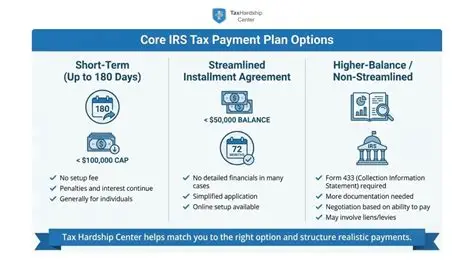
The most common solution is an installment agreement. If you can’t pay your balance in full, the IRS will often allow you to set up a monthly payment plan based on what you can afford. Instead of one large payment, you spread it out over time, which can provide immediate relief and help you avoid more aggressive collection actions.
However, not all payment plans are created equal. Some are structured in a way that keeps you paying longer and costing you more in the long run. Others may not fully account for your financial situation.
Bottom line: A payment plan can work, but it needs to be set up strategically.
2. Offer in Compromise (Settle for Less)
You’ve probably heard the phrase “settle your tax debt for pennies on the dollar.” That’s what an Offer in Compromise (OIC) is designed to do, but it’s not as simple as it sounds.
The IRS will only approve an offer if they believe you can’t realistically pay the full amount and that your offer reflects your true ability to pay. When structured correctly, this can significantly reduce your tax debt.
But many taxpayers run into issues by:
- Submitting incomplete or incorrect offers
- Failing to document their financial situation properly
Bottom line: This can be a powerful tool, but only when done right.
3. Currently Not Collectible (CNC) Status
If you truly can’t afford to pay anything, the IRS may place your account into Currently Not Collectible (CNC) status.
This essentially pauses collections and gives you breathing room. While in CNC, the IRS generally won’t pursue aggressive actions like levies, allowing you time to stabilize financially.
Keep in mind, your debt doesn’t disappear, and interest may continue to accrue, but you’re protected from immediate collection pressure.
Bottom line: CNC can provide critical relief when cash flow is tight.
4. Penalty Abatement (Reduce What You Owe)
Many taxpayers are surprised to learn that a significant portion of their balance may be penalties, not just the original tax.
The IRS may reduce or remove penalties if you qualify under certain conditions, such as first-time relief or reasonable cause. This can make a meaningful difference in your total liability.
Instead of assuming the balance is fixed, it’s worth exploring whether part of it can be reduced.
Bottom line: You may not owe as much as you think.
5. Strategic Timing (A Smarter Approach)
Sometimes, the best move isn’t jumping into the first solution available, it’s stepping back and looking at the bigger picture.
The IRS operates under a collection statute (generally 10 years), and timing can play a role in how your case is handled. In certain situations, a more strategic approach can lead to a better overall outcome.
This isn’t something to guess your way through, but it highlights the importance of having a plan.
Bottom line: The right timing can change everything.
The Biggest Mistake to Avoid
Most taxpayers take the first option the IRS offers. That’s a mistake.
The IRS’s goal is to collect as much as possible, as quickly as possible. Your goal should be to resolve your situation in the most favorable way for you, and those two goals don’t always align.
Making the wrong choice can lead to:
- Payments you can’t sustain
- Missed opportunities for better solutions
Take Control Before the IRS Does
If you’ve filed your taxes but can’t pay, the worst thing you can do is ignore it.
The IRS will continue to send notices, and your balance will continue to grow. But with the right strategy, you can take control, reduce what you owe, and move forward with confidence.
Get a Free Confidential Consultation
If you’re dealing with tax debt and unsure what to do next, call Action Tax Relief at 937-268-2737 or visit www.actiontaxrelief.com for a free consultation.
We’ll help you choose the right strategy for your situation. Take control before the IRS does.
